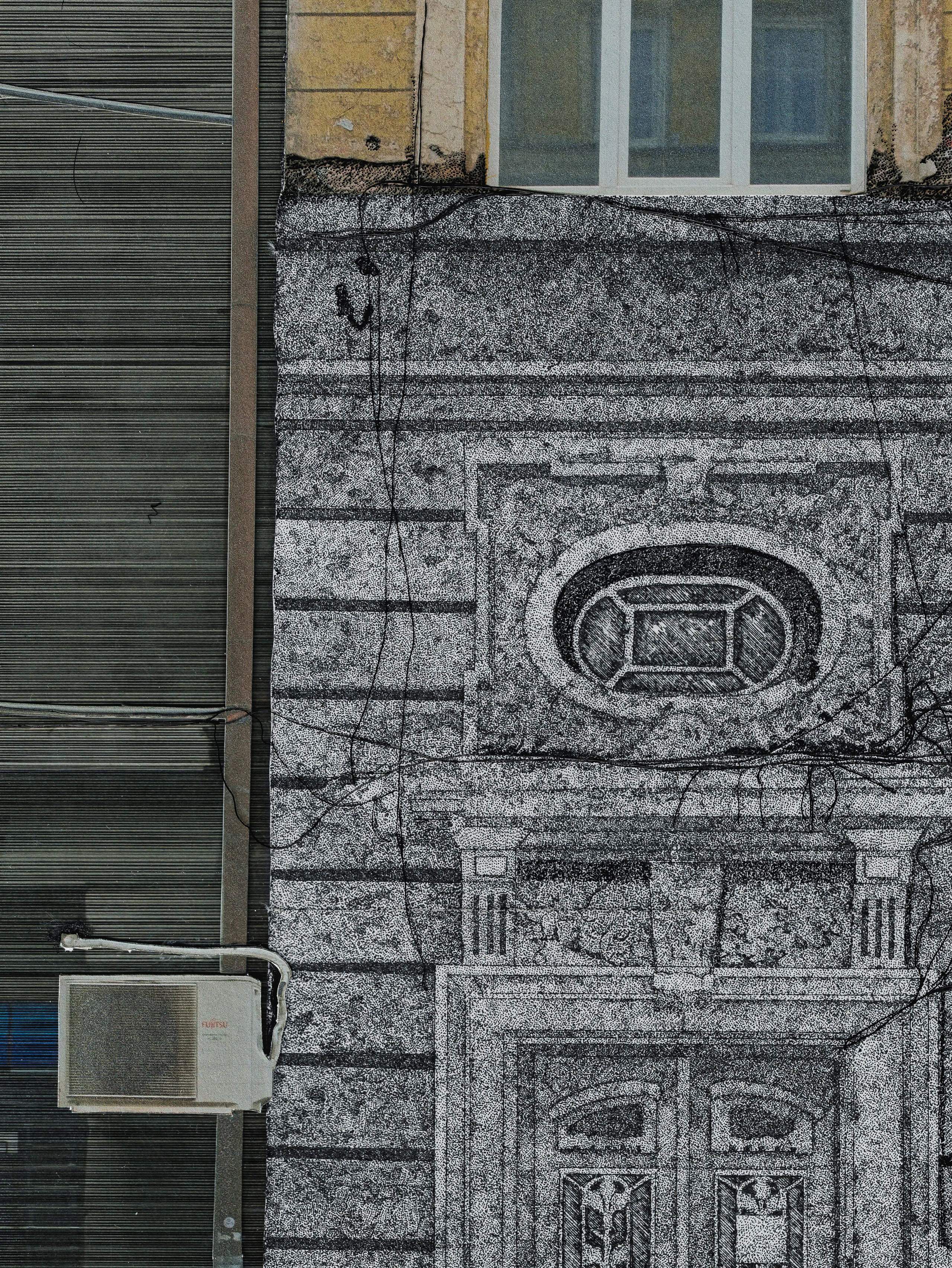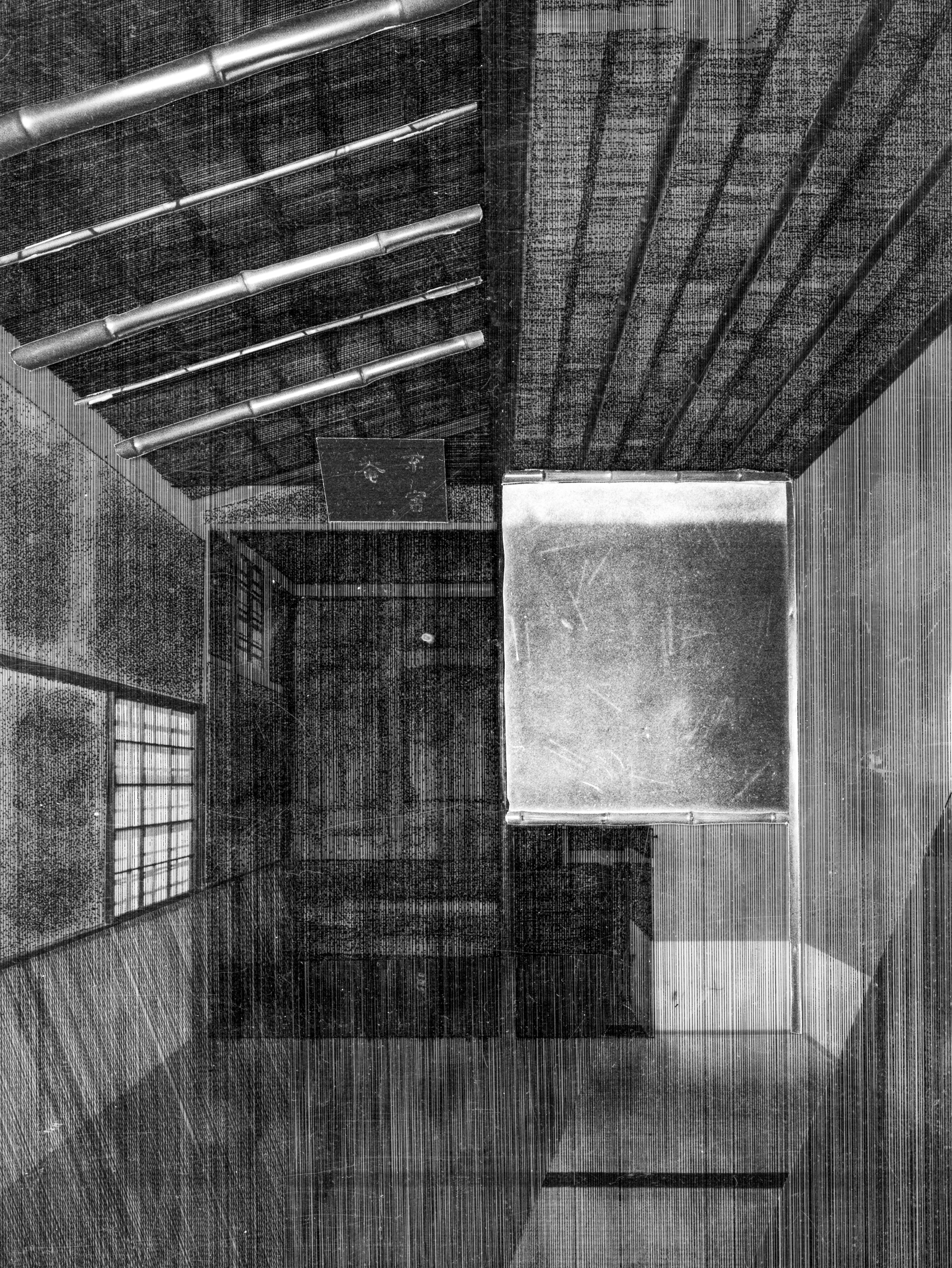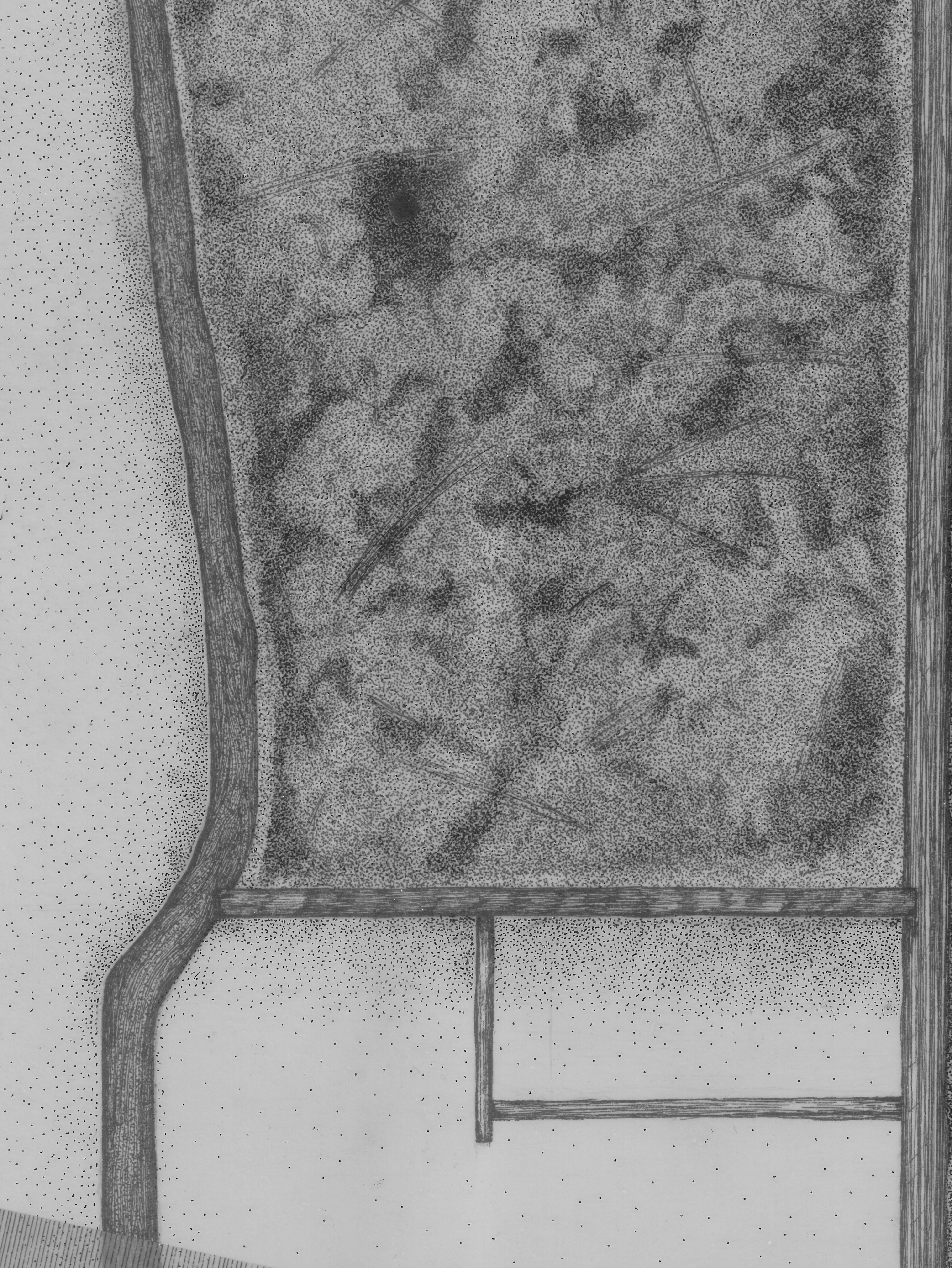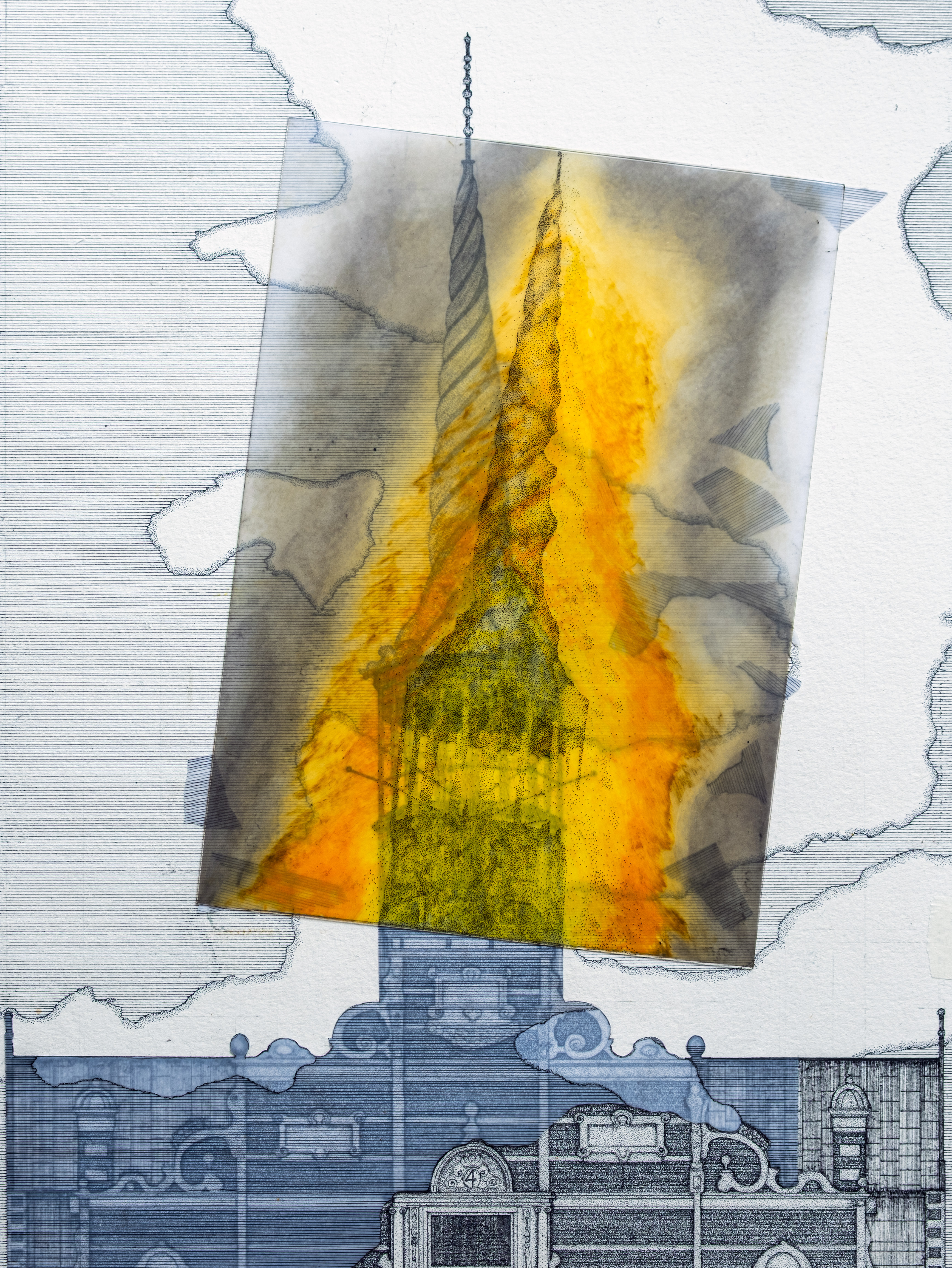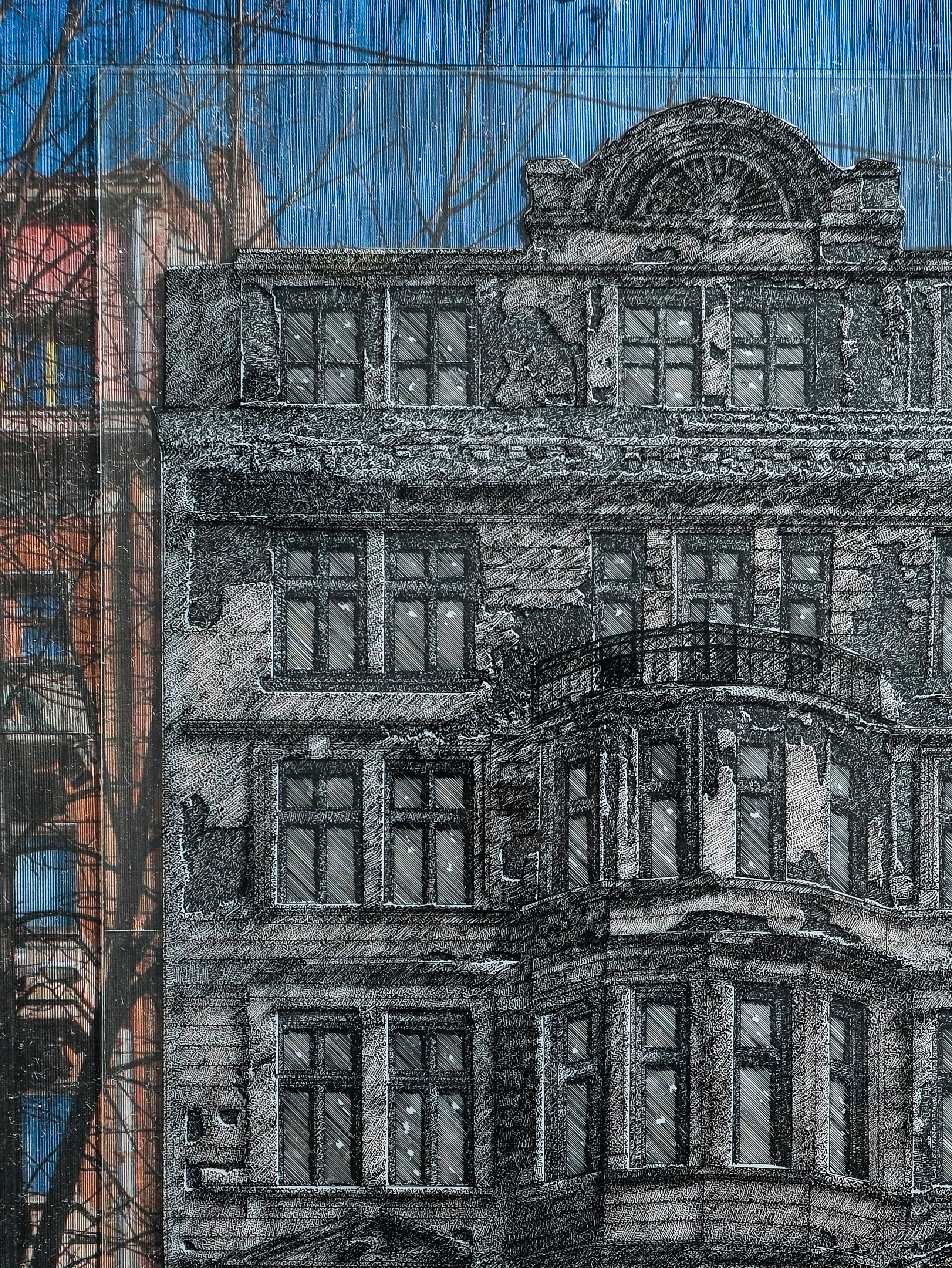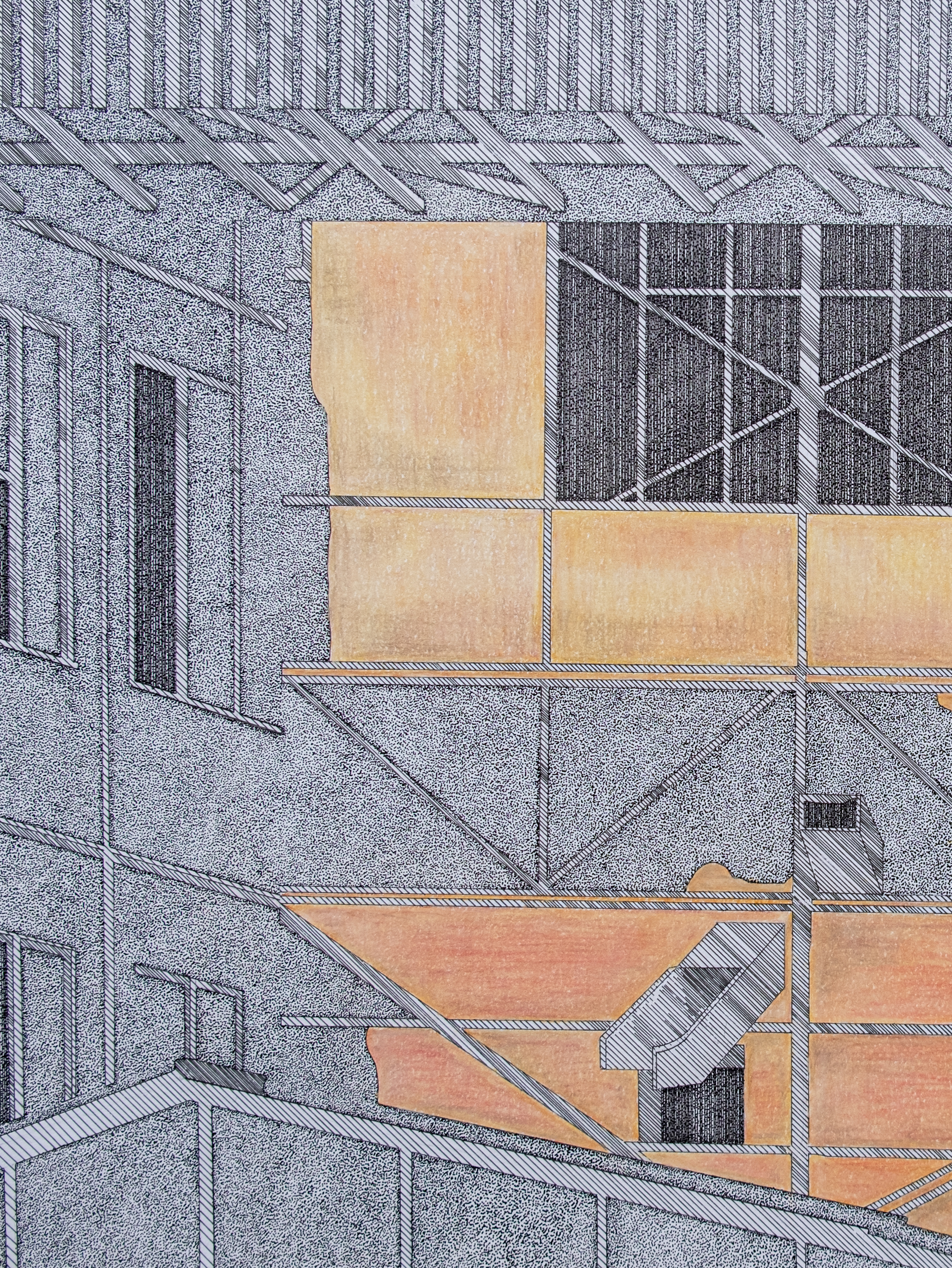
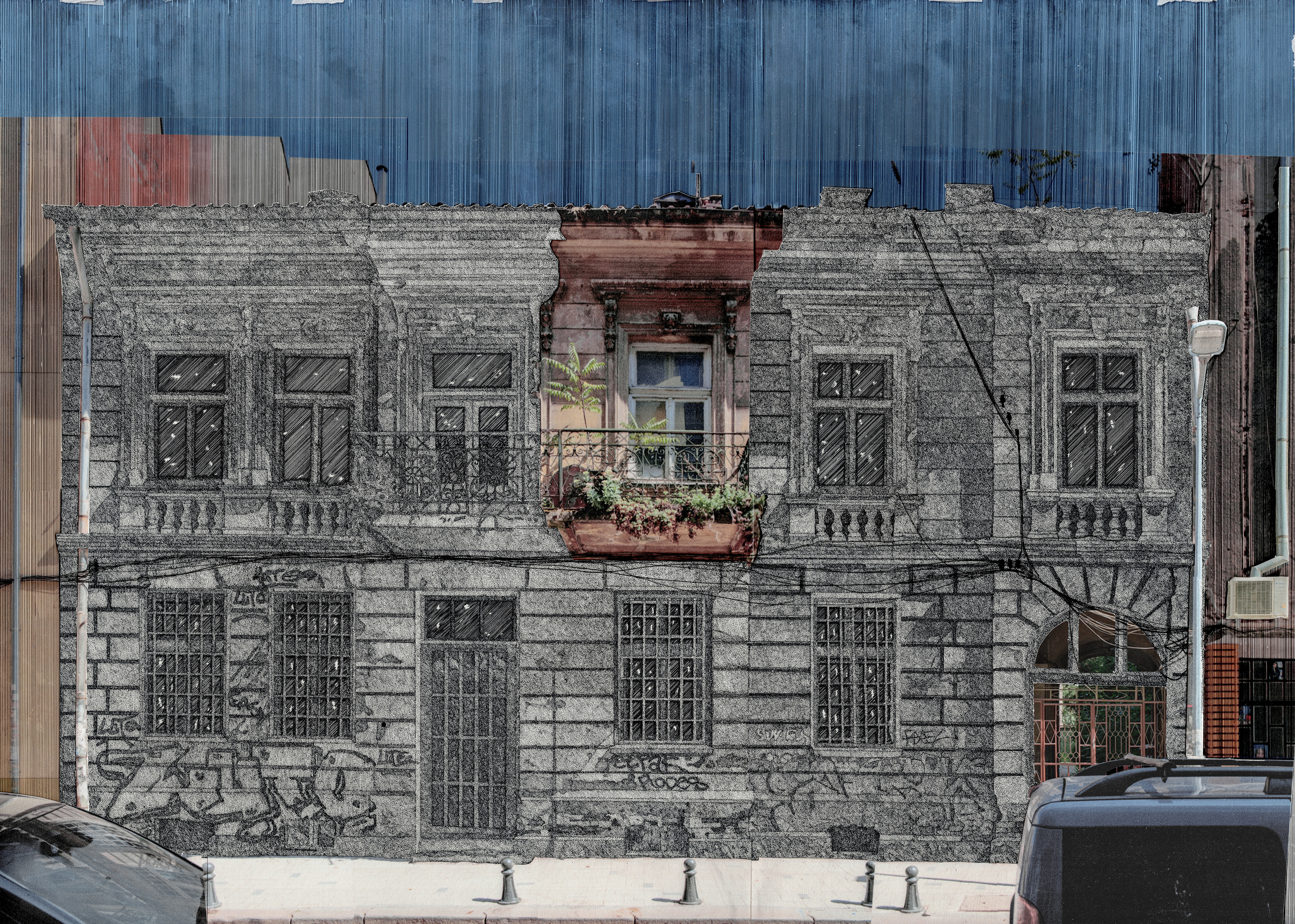
What we are looking at is the façade of a Central European inspired 19th/20th century building, currently at a critical point in the discourse about its survivability at the time of this writing. Its location can be found at the following coordinates: "Sofia Center, ul. Serdika 32". According to local news and concerned citizens, it is a property shared between a private owner and the government. This creates an environment prone to discord and neglect, threatening the state of this rapidly decaying architectural gem in the city center.
What led to the creation of this drawing, or what specifically initiated its development, is a sincere concern for a building that reveals itself only to those who seek it out. It is a subtle and warm presence, one that does not easily stand out on its narrow street. It almost seems to have surrendered recently, allowing greenery to gradually take over (even though it was planted by the current occupants) and graffiti to embed itself into the walls. The decorated windows, stone masonry, and wrought-iron balconies are overwhelmed by the passage of time and the surrounding urban fabric. In other words, the modernization of its bland late 20th and early 21st century neighbors has diminished its presence, rendering it seemingly unworthy of survival in contemporary times. Yet, it still stands, enduring wires, chemical residues, rust, steel, and other traces of urban life. It has become a canvas for the neglect and vandalism of the 21st century, embodying what appears to be a superimposition made by the growing city.
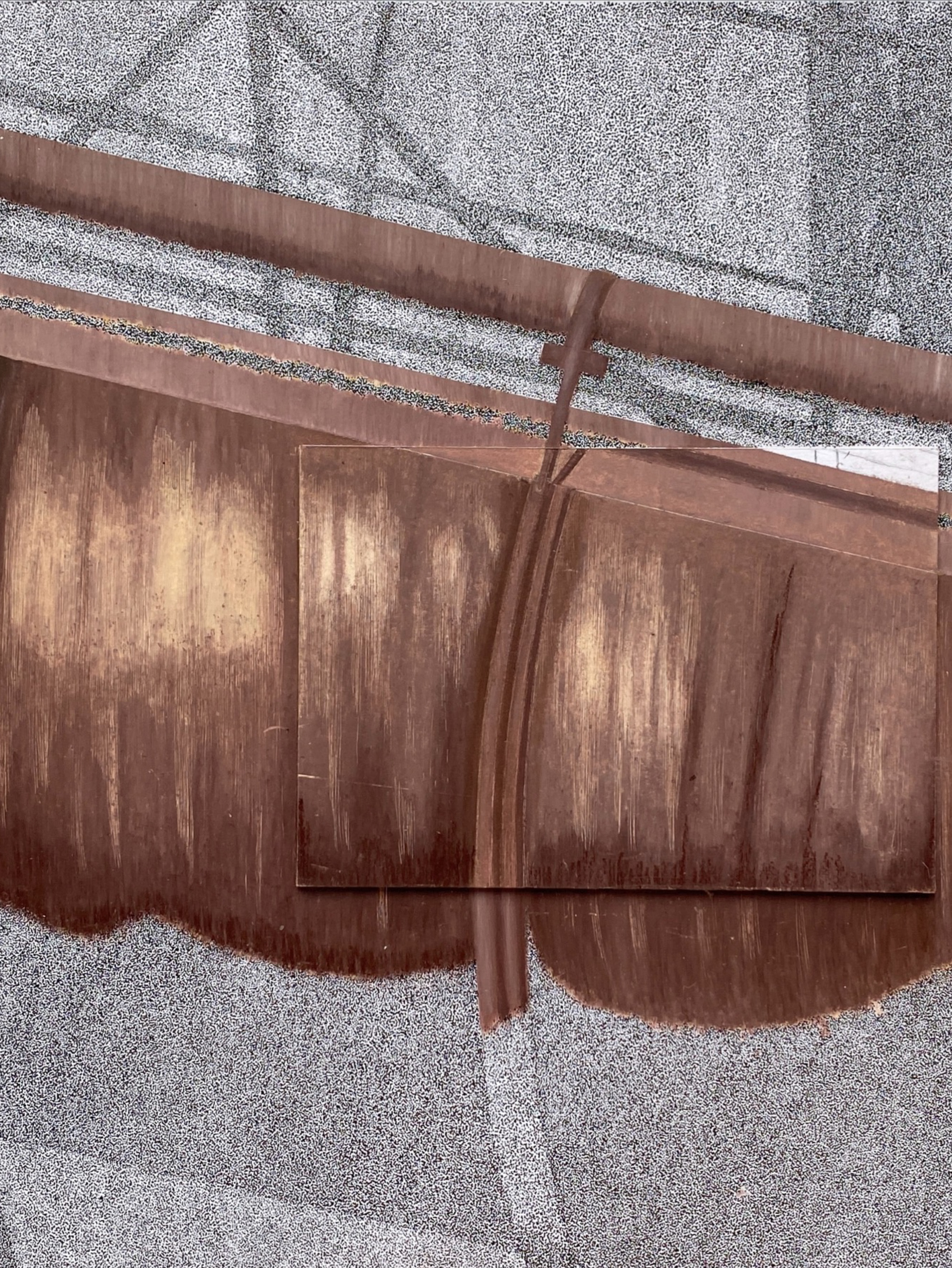
The drawing is a composition that captures two distinct visual styles. The first style is a collage of three photographs, representing the front view, or a photographic elevation, of the building. It is not intended to convey exact dimensions; rather, the attachments and adjustments reflect the wall as perceived by the photographer. Urban traces, such as lamp posts, air conditioners, cables, and other interventions, are separated out to emphasize the life layered onto the façade.
The second style focuses on material characterization, derived from the photographic collage and the building as it exists at that exact time. This is achieved by tracing the inconsistencies and imperfections of the building’s state, highlighting the details in shadows, depth, steel, glass, and decay. The drawing becomes a discourse on these elements, capturing everything that emerges within the assembled collage and emphasizing the dialogue between the building and the passage of time.
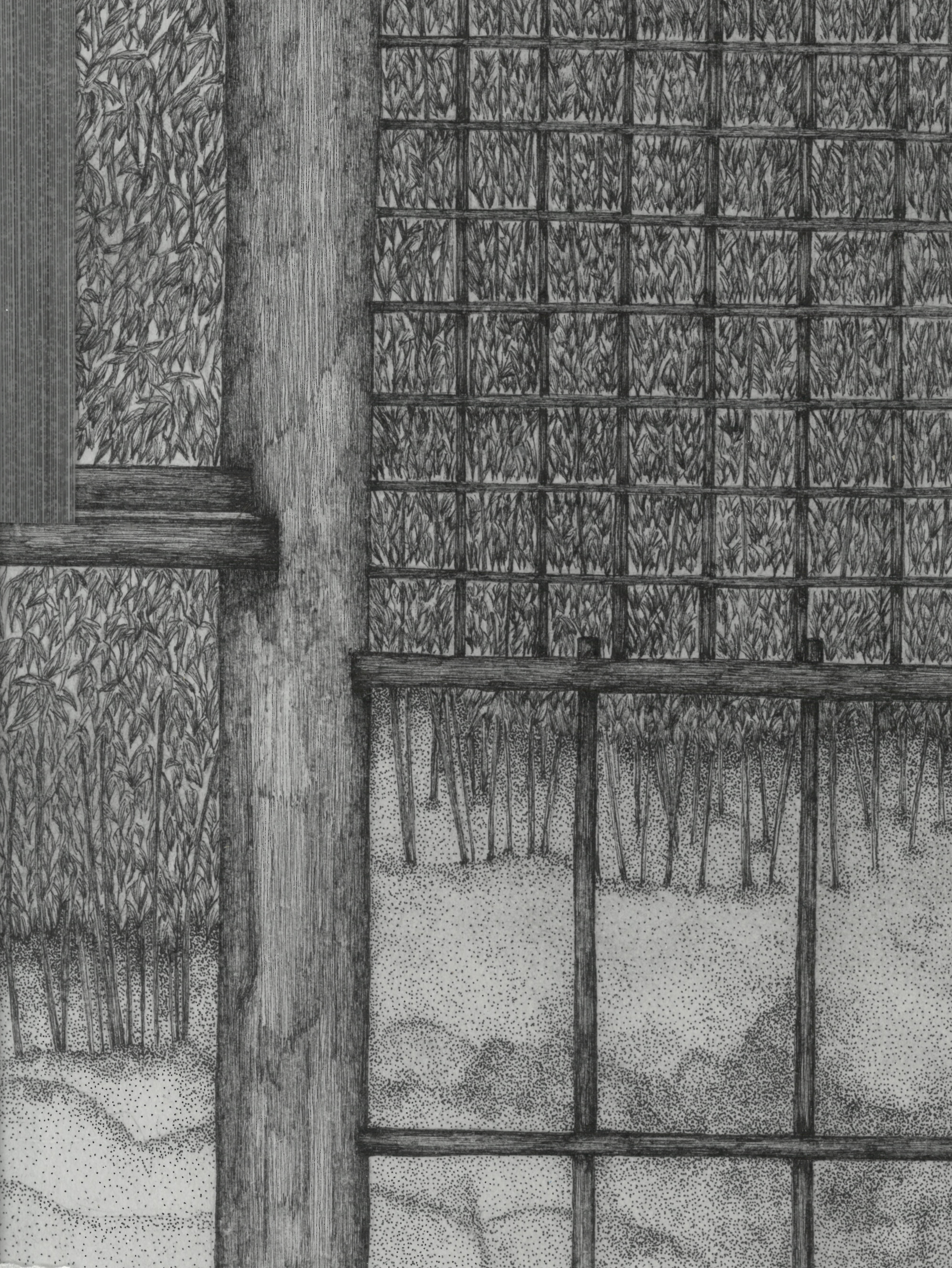
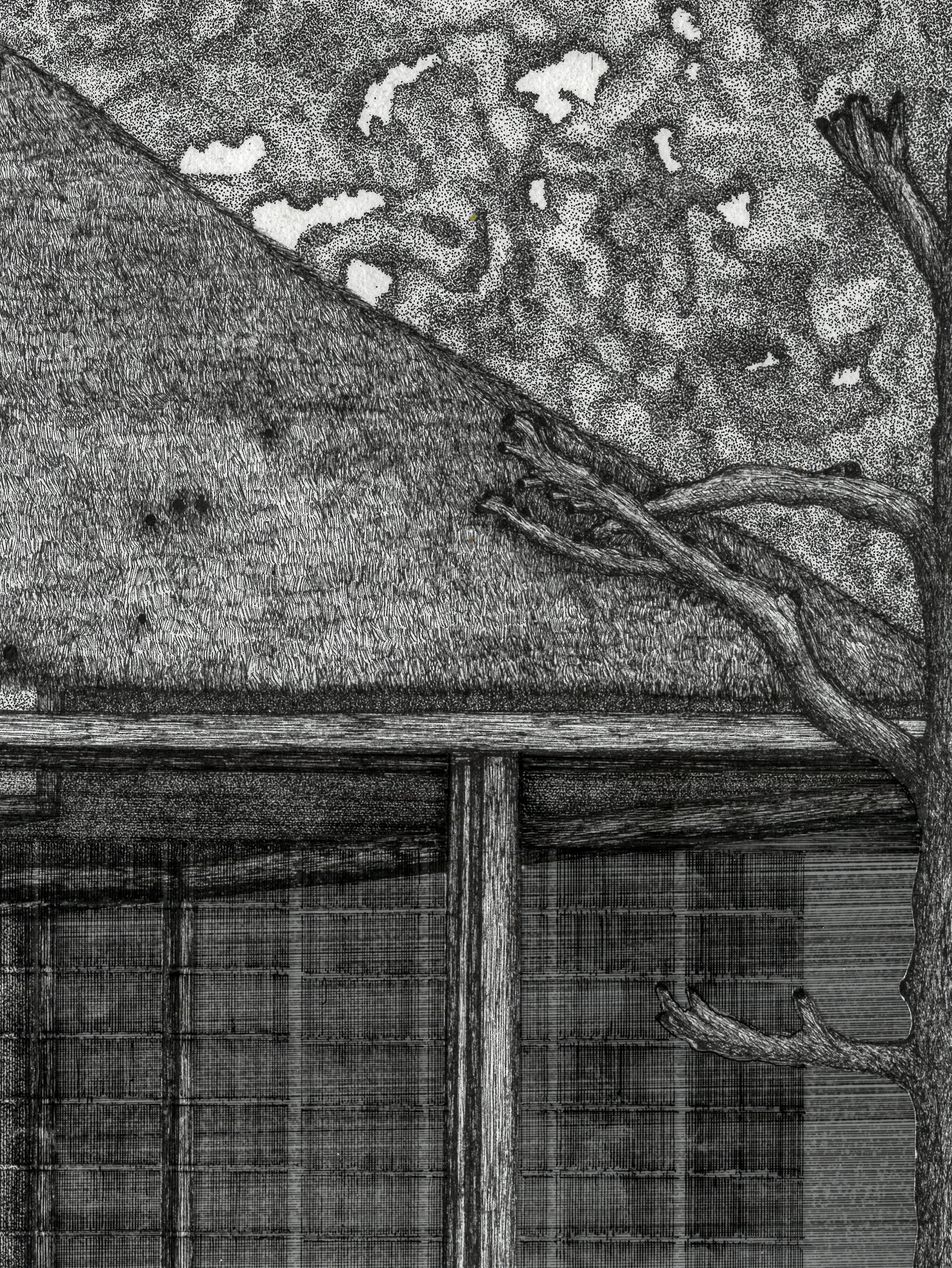
The following videos focus on what comes out of the photographs as a print out out to display in a distinct stippling style:
The following videos focus on what comes out of the photographs as a print out out to display in a distinct stippling style:
The collage and the drawing had to communicate with one another for the piece to flow as a visual discourse between the layers. Cuts are made where necessary, and in certain areas, color and life must be shown, as the drawing alone cannot fully convey their vibrancy. Elements flow naturally through the artwork some recede, while others move forward creating a stage for an urban superimposition. The movement of these elements follows the perception of the author which is not the limit of how the building should be perceived but broaden the conversation about what we are observing.
"
The drawings in this Bulgarian Buildings project were never limited to a specific size or a fixed orientation. When I encounter something that fascinates me, there is a moment of admiration, followed by an examination similar to the way a photographer approaches capturing a scene. Orientation, light, level of detail, and depth of image guide me in extracting material for my phenomenological drawings.
I was certain that this particular piece needed to be rolled out or unveiled like a scroll on paper, as an elevation. Coincidentally, it fit comfortably onto a commercially cut sheet of paper. I was aware that it would take considerable time to extract all the information captured in the photographs, now collaged into a single artwork.
In this drawing, as in my other works, I do not approach the dotting technique as a “careful” or restrained gesture, but rather as an expressive, fast-paced act that does not allow itself to wait. This method mirrors my intention when drawing: I race against time in the same way the building races against its own decay.
In this case, similarly to Urban Palimpsest, the urban elements push forward from the photograph into the drawing. As in real life, they assert themselves onto the beautiful yet deteriorating architectural façade. This creates a tension that invites discourse, with neglect and the improper handling of such buildings becoming the central focus. Some elements disappear from the drawing, others emerge, and at times the collage itself takes over.
I refer to this process as Urban Superimposition, as the displayed elements come together not to create something entirely new, but to communicate with and at times clash against one another. It represents the initial sensation experienced upon encountering this façade for the first time.
"
The piece is a drawing collage that was made with ink on cotton white paper and polyester layers. The photograph used for the collage was made and printed by the author.
Dimensions: 700 x 500 mm.
The piece is a drawing collage that was made with ink on cotton white paper and polyester layers. The photograph used for the collage was made and printed by the author.
Dimensions: 700 x 500 mm.